3 Strategies to Inspire Student Enthusiasm in Art Education
- Twinimation Studios - Dria
- education
Special Deal for Students
Enter your name and school email for a unique discount!
One of the greatest issues plaguing art educators in recent years is lack of interest and participation from students. Many art teachers struggle with student apathy, which leads to students putting minimal effort into their work. No one enjoys spending hours on lesson planning, only for disinterested students to spend each class staring out the window and presenting the bare minimum for class projects.
Having worked with a multitude of children in an educational setting, I've considered the following strategies very helpful in inspiring student engagement in art classrooms.
1. Consider Open Ended Assignments
We always apply the most passion to our interests and this mindset rings the most true in education. We enjoy learning about, and creating projects that appeal to the things we love the most.
Kids and adults alike tend to lack motivation when doing something they have to do vs. something they actually want to do. Thankfully, art classes usually allow the most freedom when it comes to lesson planning and assignments. Instead of requiring all students to execute the exact same tasks to show their understanding of art concepts, perhaps consider allowing students to design their own projects.
Twinmation Studios abides by this philosophy by crafting our educational lessons without strict guidelines. Rather than providing a list of standards each child much meet, students are free to apply their skills to the material as they best see fit.
If any students struggle with completing their assignments, consider asking what would make the project more engaging to them! How can students incorporate their interests into tasks while still fulfilling the necessary academic goals? Reformatting lessons to give students more creative control is proven to benefit learners of all ages, instilling responsibility and independence.
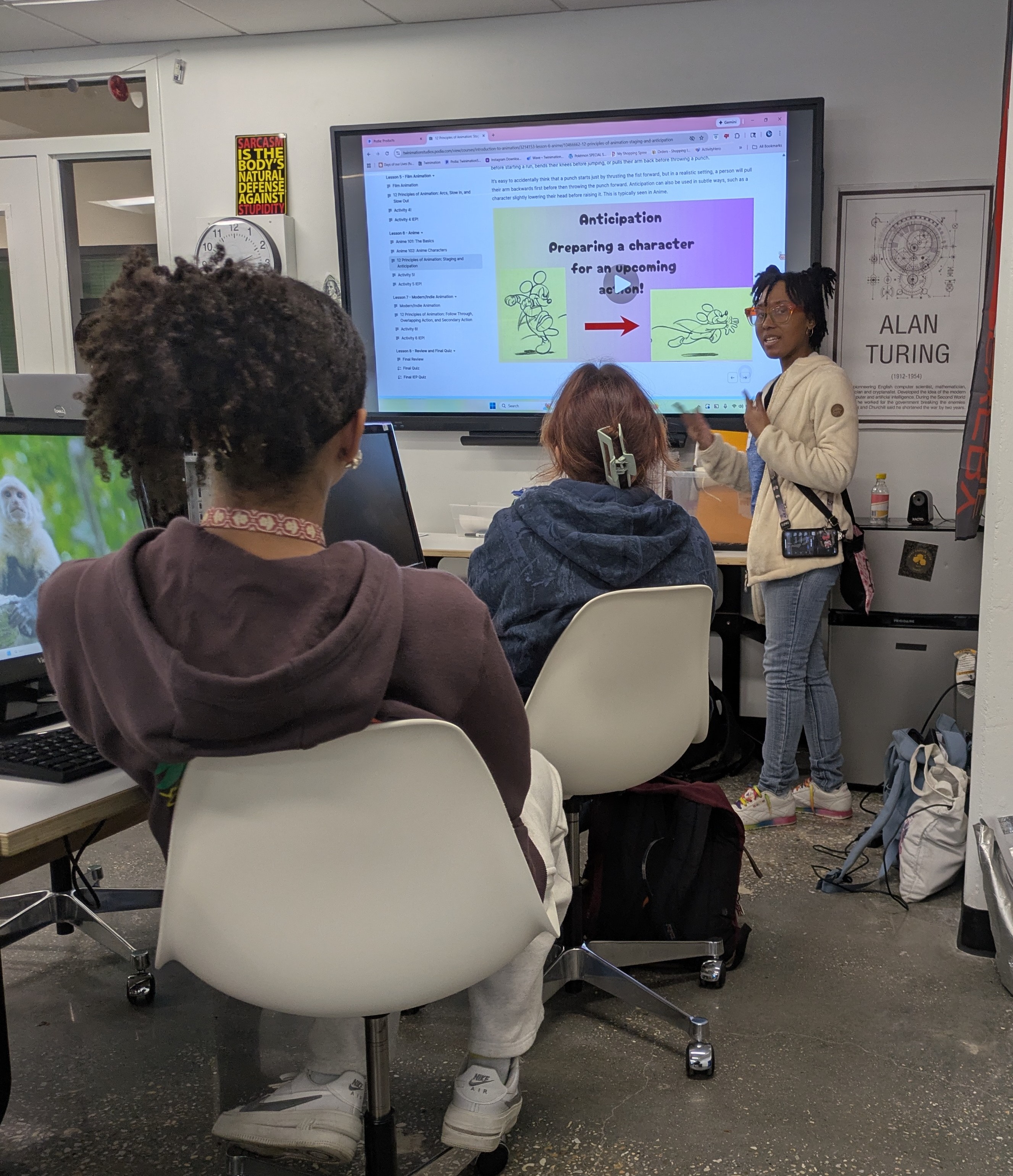
2. Encourage Simplicity and Minimalism
Another issue that can create disgruntled students, is the fear that if their work isn't good enough. If the bar is set too high, many students would rather not even try.
Naturally, we often give examples of the most famous and skilled artists to show students what they are capable of. However, for beginner artists without much confidence, we risk alienating them before they even pick up a pencil. Walt Disney, Charles Shultz and Van Gogh shouldn't be the standard for lower level learning. But if not them, then who?
A great alternative can be to encourage minimalism, by incorporating artists with a more simplistic style into lesson plans as references! While Bob Ross is not usually the first example painter brought up in major art classes due to his unorthodox methods, many beginner painters tout him as being the main inspiration at taking that first step toward painting! His incredibly simplistic painting style is both easy to remember and execute for individuals with limited painting experience. Studies also note that minimalism can help creators remove expectations from art and better enjoy the creative experience.
Twinimation Studios actually offers a Bob Ross inspired digital painting course for rookie digital painters! The aim with this course was to invite students to the digital painting space by introducing basic lessons that can be followed by all ages, before transitioning to more advanced techniques. This approach invites beginners with less experience to feel more comfortable with the lessons, while also encouraging growth along the way.
3. Highlight Application over Appearance
Regardless of which grading scale is utilized, assigning a letter grade for art assessments tends to lead to intense discussion. These is much debate on how to grade something considered to be entirely objective. Art teachers will routinely discuss the 'correct' method to grading an artwork, with common fears being that students will only focus on how to please their teacher instead of prioritizing their artistic process.
While there is no single correct answer, we believe the best strategy is to ensure that students can properly apply the subjects taught in class. For a lesson teaching the 12 Principles of Animation, you might consider the following rubric:
"Does the student clearly understand the principles? Can they execute the principles in an animation? Are they able to utilize the principle in multiple ways?"
These process-based questions are more important than, "does the drawing look pretty?" A new artist can always level up their skills in terms of design and presentation. But it is essential to ensure that the basics are understood. An artwork can look visually advanced while still lacking proper understanding of artistic principles. This is especially important for art educators to be aware of with the rise of A.I. imagery, which can look normal at a glance but tend to feature notable errors not found in processional artwork.
Bonus: Semantics Can Make a Difference
In working with students across numerous schools, I've noticed that children tend to respond differently when given "activities" compared to being given "assignments". An "assignment" holds a lot of weight and naturally it feels more like "work". It's something a student can become apathetic toward should they dislike what is being given to them.
An "activity" on the other hand is freeing; students feel like they have more control. Additionally, activities are naturally framed to be fun. It is essentially the opposite of work, and therefore students usually respond positively. Activity isn't the only word which can substitute for assignment in an effort to inspire engagement. "Project" and "Task" can convey the importance of work, while also not being as heavy as assignment. Instructors are also completely free to create their own terminology for their lesson plans!
In Conclusion
Utilizing these techniques, art educators can provide a unique, learner-led experience for their students across all grade levels. Twinimation Studios will continue to promote such strategies across our educational lessons and products. I would encourage all art educators to frame school work tasks in the aforementioned manner!